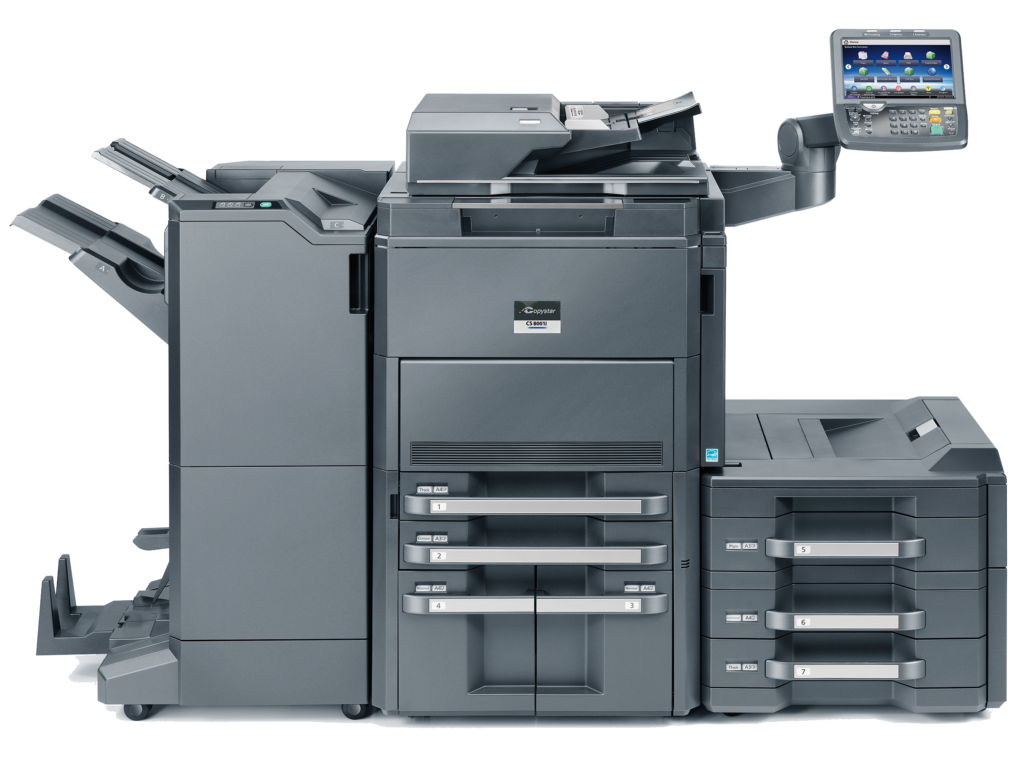
When deciding whether to lease or purchase a copier or MFD printer, you need to weigh several critical factors. Leasing offers lower initial costs, inclusive maintenance, and flexibility to upgrade, aligning with evolving business needs. However, it might result in higher cumulative costs over time. Purchasing requires a substantial upfront investment but allows for depreciation tax benefits and eliminates long-term monthly payments. Maintenance remains your responsibility, potentially leading to unexpected repair expenses. Leasing may provide greater adaptability and access to the latest technology, fostering enhanced productivity. To make an informed decision, consider analyzing these aspects thoroughly.
Highlights
- Leasing provides flexibility with lower upfront costs and included maintenance, while purchasing requires significant initial investments and ongoing upkeep responsibilities.
- Total cost of ownership for leasing can exceed purchasing due to cumulative payments over time, despite lower monthly expenses.
- Leasing allows easy access to the latest technology and simpler upgrades, reducing risks of technological obsolescence associated with purchasing.
- Tax advantages differ: leasing payments are operational expenses, while purchasing allows for depreciation deductions.
- Leasing offers financial predictability by including maintenance in agreements, avoiding unexpected repair and supply replacement costs common with purchased equipment.
What to Consider

When deciding whether to lease or purchase a copier or MF printer, you should first consider your budget and conduct a thorough cost analysis, taking into account initial expenses and long-term financial commitments. Audit your current copy volume to gauge your specific needs.
Maintenance and repair responsibilities also play a critical role, as leasing often includes service agreements that could save on unexpected costs. Finding the right copier capabilities and capacity to optimize productivity is essential.
Flexibility and the potential for upgrades shouldn’t be overlooked, as leasing provides more opportunities to stay current with evolving technology without large upfront investments.
Budget and Cost Analysis
Evaluating your budget and conducting a thorough cost analysis is imperative before deciding whether to lease or purchase a copier or MF printer. First, consider the initial costs. Purchasing a device outright requires a significant upfront investment, while leasing offers a lower initial cost but includes recurring payments. Assess how much liquidity you can allocate without straining other business operations.
Next, examine the total cost of ownership (TCO) over the device’s lifespan. Leasing might appear cost-effective monthly, but cumulative payments can exceed the purchase price over time. Calculate the TCO for both options, factoring in depreciation for ownership and possible interest rates for leasing.
Consider your company’s growth and scalability needs. Leasing provides flexibility with upgrades, allowing you to stay current with technology without additional expenditures. Purchasing, while more cost-intensive initially, could be beneficial if your equipment needs remain stable.
You should also account for tax implications. Leasing payments might qualify as operational expenses, offering tax advantages, whereas purchasing allows for depreciation deductions. Analyzing these factors thoroughly guarantees your decision aligns with your financial strategy, enabling informed choices that foster inclusion in the business community.
Maintenance and Repairs
Guaranteeing your copier or MF printer stays functional means regularly addressing maintenance and repair needs. When you lease, you often benefit from included maintenance services, reducing the need for sudden expenditure on repairs. Leasing agreements typically cover routine maintenance, troubleshooting, and even parts replacement, so you can focus more on your core business activities and less on technical issues.
On the other hand, purchasing a copier or MF printer means you’re solely responsible for upkeep. You’ll need to take into account the cost and logistics of regular maintenance schedules, which can be time-consuming and expensive without the support of a service contract. Unexpected breakages or malfunctions might also require a significant budget allocation and quick decision-making to avoid extended downtime.
Leasing often means you have access to professional maintenance services included in your monthly payment, creating a hassle-free experience. However, owning your equipment provides more control over who services it and how often. Making this decision requires careful consideration of your team’s capacity to manage these tasks and the financial stability to handle unexpected repairs. Prioritize understanding the full scope of potential maintenance demands to ensure you’re making the best choice for your organization.
Flexibility and Upgrades
Considering the fast-paced evolution of technology, having flexibility and access to upgrades is critical for modern businesses. When leasing a copier or MF printer, you’ll often find it comes with the advantage of easily updating your equipment to the latest models. Leasing agreements typically include options for upgrading to newer technology, ensuring your business remains competitive without large up-front investments.
Leasing also allows for adaptable contract terms, letting you adjust the length and specifics as your business needs evolve. It provides the flexibility to scale up or down based on changing demands without the burden of owning outdated equipment. This flexibility can translate into improved efficiency and productivity, fostering a stronger sense of belonging within your team as they work with top-tier technology.
On the other hand, purchasing a copier or MF printer means you own the asset outright, but it comes with the risk of technological obsolescence. Investing in new models entails significant costs and potential disruptions. Consequently, if your business prioritizes staying on the cutting edge, a leasing option might align better with your strategic goals, offering you both flexibility and the latest upgrades without substantial capital outlay.
MFD Printers Benefits
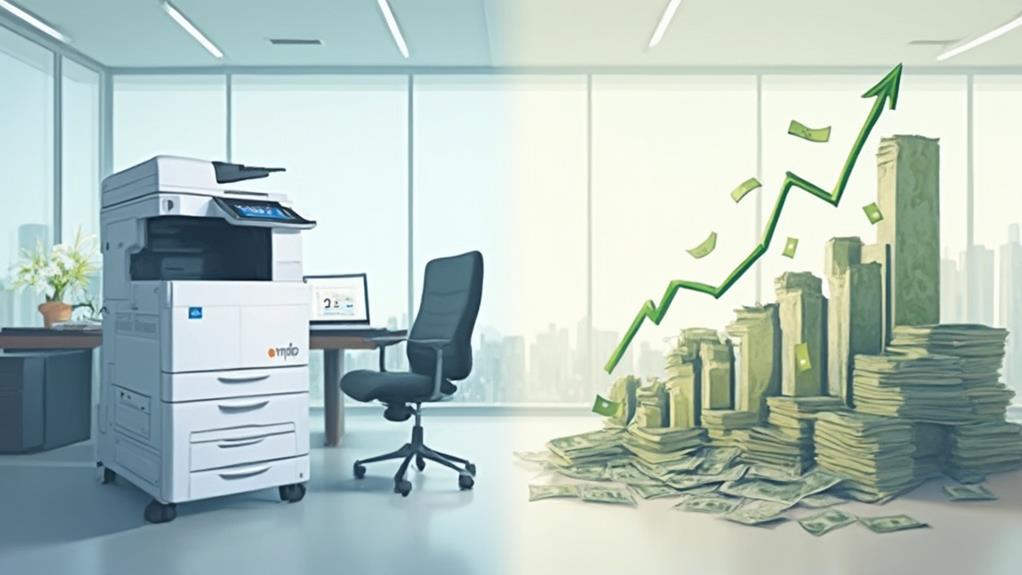
Understanding the benefits of leasing versus purchasing a copier or MF printer can profoundly influence your decision, given the potential for cost savings, flexibility, and access to the latest upgrades. Additionally, maintenance and repairs are often included in lease agreements, reducing unexpected expenses, while certain tax implications can provide further financial advantages.
Cost Savings Potential
Leasing a copier or MF printer can often lead to significant cost savings compared to purchasing one outright. When you’re part of an organization or business with budget constraints, spreading out payments in the form of a lease allows for better cash flow management. Instead of bearing the full initial cost, which can be substantial, you can allocate your funds more effectively towards other operational needs.
Additionally, leasing typically includes maintenance and service agreements. This means you don’t have to worry about unexpected repair costs, which can accumulate and strain your budget. With leasing, you often get the latest technology without a hefty upfront investment, ensuring your equipment is always up-to-date and functioning ideally.
Furthermore, leasing can offer tax advantages. Lease payments can often be deducted as business expenses, reducing your taxable income and providing further financial benefits. By opting for a lease, you’re also avoiding the depreciation costs associated with owning office equipment.
In essence, leasing a copier or MF printer not only minimizes your initial expenditure but also spreads out costs, includes essential services, and can offer tax benefits, making it a cost-effective solution for your organization.
Flexibility and Upgrades
Adaptability is a crucial benefit when you lease a copier or MF printer. Leasing allows you to upgrade your equipment more frequently, which means you’ll always have access to the latest technology. This can be particularly advantageous as technology evolves rapidly, and staying current can significantly enhance your business operations, ensuring that you remain competitive.
When you lease, you aren’t locked into outdated machinery; instead, you can easily scale up or switch to new models as your needs change.
Flexibility also extends to financial terms. Leasing agreements offer varied durations and terms, allowing you to adjust to budget changes without the substantial upfront costs associated with purchasing. This financial flexibility can free up capital for other essential aspects of your business, enhancing your overall operational agility.
With a lease, you’re provided with the freedom to tailor equipment and financial terms to best suit your business’s evolving requirements.
Furthermore, leasing can offer you the ability to try out different machines to see which best fits your needs before committing to a longer-term arrangement. This approach reduces the risk of being stuck with an unsuitable piece of equipment, fostering a sense of security and belonging within your organizational structure.
Maintenance and Repairs
One significant advantage of leasing a copier or MF printer is the inclusive maintenance and repairs that often come with the agreement. When you lease, the service provider generally includes comprehensive maintenance and repair services, ensuring your equipment stays in peak condition without additional costs or logistical hassles. By opting for a lease, you can focus on your core tasks and let the experts handle the technical upkeep.
Consider these benefits:
- No Unexpected Expenses: Leasing arrangements typically cover parts, labor, and service visits, so you won’t face sudden repair bills.
- Professional Technicians: Maintenance and repair services are performed by trained professionals, guaranteeing that any issues are expertly resolved, minimizing downtime.
- Regular Maintenance Checks: Routine maintenance is often scheduled and conducted proactively, preventing potential problems before they escalate and ensuring ideal performance.
- Efficiency and Reliability: With the assurance that your copier or MF printer is well-maintained, you can rely on consistent, efficient operation, contributing to a smoother workflow and higher productivity.
Tax Implications
When evaluating the decision to lease or purchase a copier or MF printer, examining the tax benefits can greatly influence your choice. Leasing often allows you to deduct the entire lease payment as a business expense, which can provide significant tax savings over time. This method treats lease payments as operational expenses, reducing your taxable income and potentially improving cash flow.
On the other hand, purchasing a copier or MFD printer may offer different but equally beneficial tax advantages through Section 179 of the IRS tax code. Section 179 allows businesses to deduct the full purchase price of qualifying equipment immediately rather than depreciating over several years. This can result in a substantial tax deduction in the year the equipment is acquired, making it a compelling option if your business has the financial capacity to absorb the initial expenditure.
Moreover, the total cost of ownership, including maintenance and repairs, must be factored in, as they can also be written off as business expenses. Understanding both lease and purchase options for tax implications guarantees you make the most financially advantageous decision for your business while fostering a sense of belonging among your team by providing the best tools possible.
Hidden Maintenance Costs
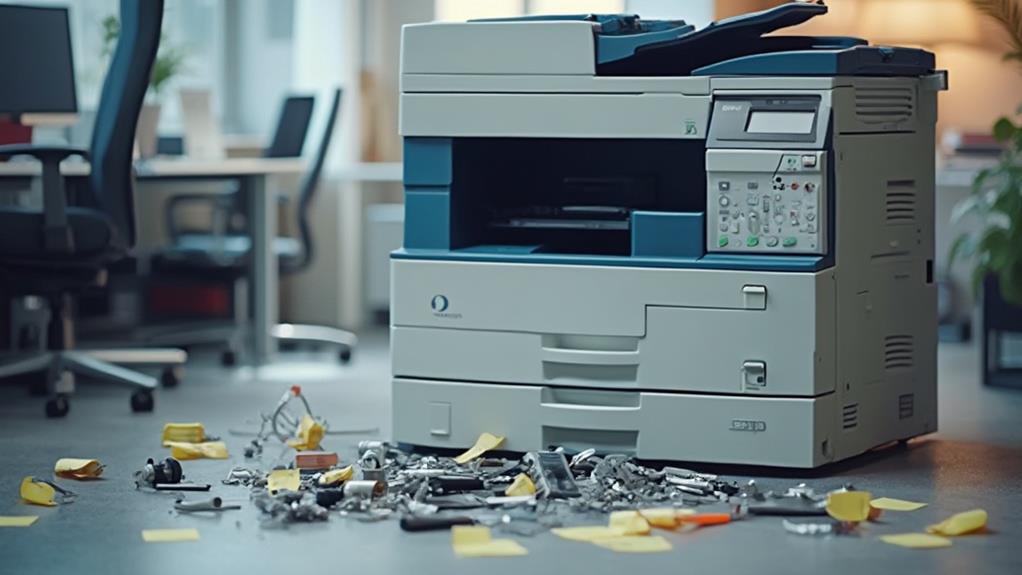
When considering whether to lease or purchase a copier or MF printer, you should account for hidden maintenance costs, which can substantially impact your budget. Unexpected repair bills, routine servicing expenses, and supply replacement costs are often overlooked but are essential considerations.
| Expense Type | Lease | Purchase |
|---|---|---|
| Unexpected Repair Bills | Often included | Owner’s responsibility |
| Routine Servicing Expenses | May be covered | Paid separately |
| Supply Replacement Costs | Sometimes included | Owner’s responsibility |
Unexpected Repair Bills
Owning a copier or MF printer can often introduce unforeseen expenses that many don’t initially consider. These unexpected repair bills can sneak up on you, leading to drastically budget overruns and operational disruptions. When equipment breaks down—and it will, given enough time—you’re suddenly faced with hefty repair costs that weren’t part of your financial planning.
Consider these potential hidden repair costs:
- Replacement Components: High wear parts like fusers, rollers, and print heads can be costly to replace, substantially denting your budget.
- Labor Costs: On-site visits by technicians or contractors usually come with a high hourly rate, which adds up quickly.
- Downtime Impact: When your printer or copier is down, productivity suffers, causing indirect costs like missed deadlines or strained team efficiency.
- Firmware and Software Updates: These may sometimes require professional assistance to maintain compatibility and functionality, leading to additional, often unexpected, expenses.
Rather than being blindsided by these costs, leasing can often offer a more manageable financial model. Leases typically include maintenance agreements that cover repair bills, reducing the financial uncertainty. Understanding these possibilities helps create a more predictable and structured approach to managing office equipment.
Routine Servicing Expenses
Routine servicing expenses can quietly chip away at your budget, turning what seemed like a minor cost into a major expenditure over time. When you purchase a copier or MF printer, you’re responsible for all ongoing maintenance required to keep the machine in ideal working condition. This includes regular services like cleaning, part replacements, and software updates.
These routine tasks, while necessary, can accumulate into substantial costs that weren’t initially evident at the time of purchase.
Leasing, on the other hand, often includes a maintenance agreement as part of the contract, ensuring that your equipment receives the necessary upkeep without unexpected expenses. Service contracts typically cover regular check-ups, which help prevent major problems down the line by catching issues before they escalate. This approach not only saves you money but also assures reliability and minimizes downtime, fostering a smooth workflow within your organization.
Supply Replacement Costs
One often overlooked aspect of managing copiers and MF printers is the ongoing cost of supply replacements. When you lease, supply costs for items like toner, ink, and paper can be included in your agreement, potentially lowering overall expenses. Purchasing your machine means you’re responsible for bearing all costs directly, which can add up over time.
It’s essential to understand these hidden maintenance costs, as they can profoundly impact your budget.
- Toner and Ink: These are consumed rapidly, particularly in high-volume environments, and can become a substantial recurring expense.
- Paper: Although seemingly minor, continuous replenishment is necessary, especially for large-scale operations, adding to your ongoing costs.
- Replacing Drums and Imaging Units: These parts have finite lifespans and replacing them is essential to maintain print quality, often adding unanticipated expenses.
- Waste Disposal: Proper disposal of used cartridges and other consumables might incur additional fees or require specific services.
Think about your long-term needs and consider whether leasing or purchasing aligns better with your operational goals and budget constraints. By fully understanding and planning for these hidden costs, you’ll guarantee the smooth, efficient running of your office operations without unexpected disruptions.
Office Equipment FAQ
How Does Leasing Impact Company Tax Deductions Compared to Purchasing?
You’ll find leasing can provide tax benefits by allowing you to deduct lease payments as business expenses. In contrast, purchasing offers depreciation deductions. It’s critical to evaluate which option aligns with your company’s financial strategy.
Is It Possible to Upgrade Leased Equipment Mid-Term?
You can usually upgrade leased equipment mid-term. Just reach out to your leasing provider. They’ll often work with you to guarantee you have the latest technology, fostering a sense of progress and belonging within your team.
What Is the Typical Lease Duration for Copiers and MF Printers?
You’re usually looking at lease terms ranging from 36 to 60 months. It’s common, gives you a predictable monthly cost, and fits budget planning. Most businesses in the community find it manageable and convenient.
Are There Any Penalties for Terminating a Lease Early?
If you end a lease early, you might face penalties. Often, there are fees to cover the remaining term or administrative costs. It’s important to understand the terms before committing, so you don’t feel isolated.
Can Leased Equipment Be Customized to Suit Specific Business Needs?
Absolutely, you can customize leased equipment to fit your business needs. Your leasing company will usually work with you to guarantee the equipment meets your specific requirements, so you’ll feel right at home with your solution.