You’ll want to select shallow-rooted plants like creeping thyme and sedums that won’t destabilize your pavers beneath the surface. Position vegetation away from drainage channels and paver edges—typically two to three feet back—to protect the compacted foundation layer. Deep roots can lift and shift pavers, creating trip hazards and structural damage over time. Design pathways that guide foot traffic away from planted zones using subtle edging or landscape borders. Finally, choose climate-appropriate native plants suited to your USDA hardiness zone to minimize maintenance demands while ensuring long-term success around your hardscape.
Expert Highlights
- Select shallow-rooted plants like creeping thyme and sedums to prevent structural damage to pavers.
- Position plants away from drainage channels and paver edges to maintain proper water movement and foundation integrity.
- Keep plants two to three feet from paver edges and install root barriers to prevent displacement.
- Design pathways and use visual cues to guide foot traffic away from planted zones.
- Choose climate-appropriate native plants matched to your USDA hardiness zone and soil type for reduced maintenance.
Select Shallow-Rooted Plants That Won’t Lift Pavers
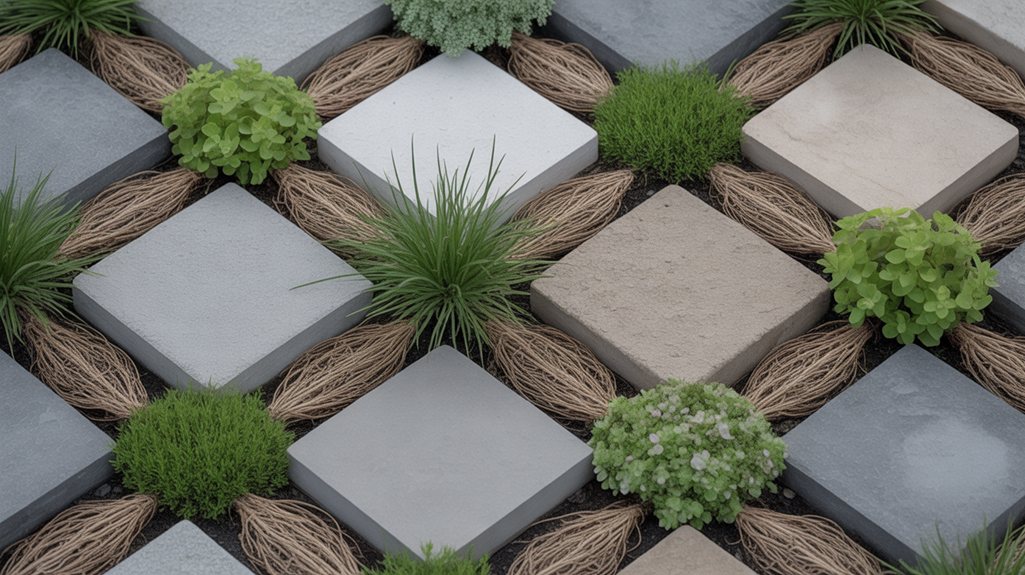
One of the biggest challenges you’ll face when landscaping around pavers is choosing plants that won’t damage your hardscape investment—and the culprit’s usually right beneath the soil. Deep-rooted plants like trees and shrubs can crack, shift, and heave pavers as they expand underground, compromising both aesthetics and safety for those you’re serving.
The solution is selecting shallow-rooted varieties instead. Creeping thyme, sedums, and ornamental grasses typically root just two to six inches deep, allowing them to thrive alongside pavers without disruption. These plants also require less maintenance while providing visual appeal and erosion control.
Design Plant Placement to Protect Drainage and Soil Stability
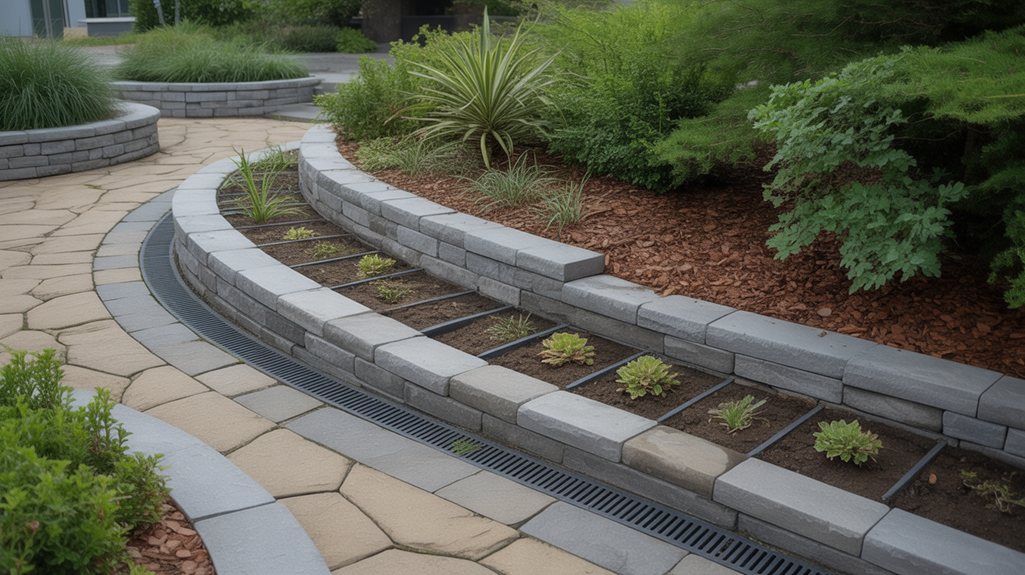
While shallow-rooted plants won’t damage your pavers structurally, their placement still matters tremendously because poor positioning can compromise the drainage systems beneath your hardscape and destabilize the soil that supports everything above it. You’ll want to position plants away from drainage channels and perimeter edges where water flows, as clustered vegetation can block water movement and create pooling issues. Instead, space plants strategically in broader paved areas where they won’t interfere with subsurface systems. This approach protects the compacted base layer that keeps your pavers level and stable. When you thoughtfully plan plant placement, you’re safeguarding the foundation’s integrity while creating an attractive landscape that’ll serve visitors and your property’s long-term durability simultaneously.
Know How Plant Roots Affect Paver Integrity Over Time
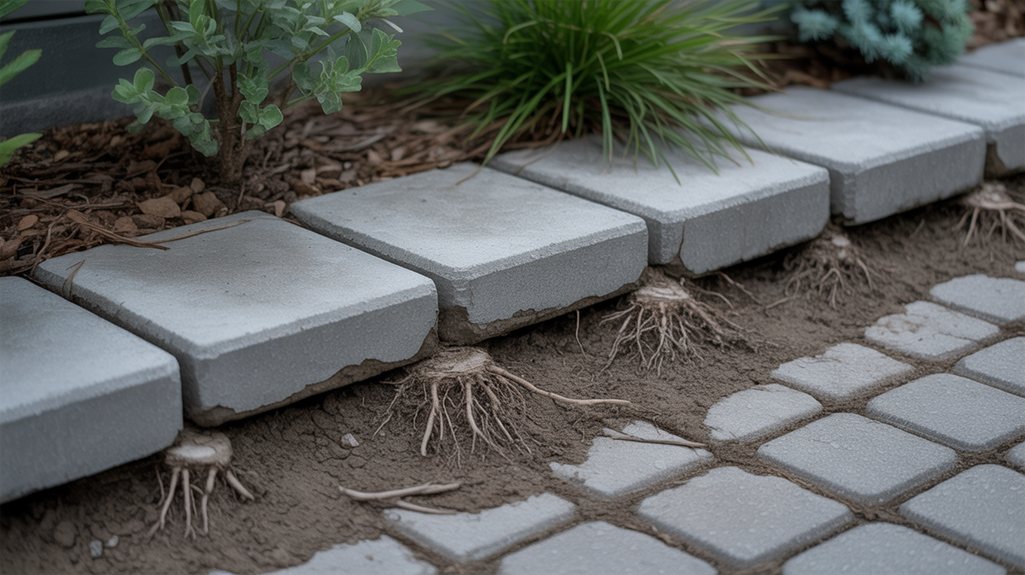
As your landscape matures, roots from nearby plants’ll gradually expand beneath your paved surfaces, and understanding how this growth impacts your pavers is critical to preventing costly damage down the road. Root systems can lift and shift pavers unevenly, creating trip hazards and compromised drainage. Aggressive root structures, like those from trees or shrubs, penetrate soil layers and exert upward pressure that destabilizes your hardscape foundation.
To protect your investment, select shallow-rooted plants positioned at least two to three feet away from paver edges. Install root barriers beneath plantings to redirect growth patterns away from your surfaces. Monitor established plants annually for signs of displacement, addressing issues before minor shifts become major structural problems requiring expensive repairs or complete replacement.
Route Foot Traffic Away From Planted Zones
Beyond managing what happens beneath the surface, you’ll also need to contemplate how people actually use your paved areas and where they naturally walk. Heavy foot traffic compacts soil around plants, restricts root growth, and damages delicate stems and foliage.
To protect your plantings while serving your community’s needs:
Protect plantings while welcoming your community by strategically designing pathways, creating gathering spaces, and installing subtle barriers.
- Design pathways that deliberately guide visitors away from vegetated zones using clear visual cues and strategic paver placement
- Create designated rest areas or gathering spots that redirect foot traffic toward durable paved surfaces rather than planted beds
- Install subtle barriers like low edging or landscape borders that signal protected areas without appearing unwelcoming
Pick Plants Suited to Your Climate and Maintenance Level
How do you choose plants that’ll thrive in your specific location without becoming a constant maintenance burden?
The key involves matching your selections to your climate zone and available time. Research your USDA hardiness zone, then identify plants native to similar conditions, since they require less water, fertilizer, and pest management. Consider your soil type—whether it’s sandy, clay, or loamy—because mismatched plants struggle and demand excessive intervention.
| Climate Type | Ideal Plants | Water Needs | Maintenance |
|---|---|---|---|
| Hot, Dry | Sedums, Lavender | Low | Minimal |
| Temperate | Hostas, Creeping Thyme | Moderate | Moderate |
| Cool, Moist | Ferns, Astilbe | High | Regular |
| Coastal | Beach Roses, Ornamental Grasses | Variable | Low |
This strategic approach guarantees your landscape serves guests beautifully while respecting your time investment.
Frequently Asked Questions
How Much Space Should I Leave Between Pavers and Planted Areas?
You’ll want to leave at least 6 to 12 inches between your pavers and planted areas. This spacing allows plants room to grow without overtaking your hardscape while giving you adequate access for maintenance and care.
What’s the Best Time of Year to Plant Around Existing Pavers?
You’ll find spring and fall ideal for planting around your existing pavers. These seasons offer moderate temperatures and adequate moisture, helping plants establish strong roots while you serve your community through thoughtful landscaping.
Can I Use Mulch or Ground Cover Between Pavers and Plants?
You can absolutely use mulch or ground cover between pavers and plants. Mulch retains moisture and regulates soil temperature, while ground cover prevents weeds and stabilizes soil. Both options serve your landscape’s health beautifully.
How Often Should I Water Plants Growing Near Pavers?
You should water plants near pavers when the soil’s top inch feels dry, typically every two to three days during growing season. You’ll adjust frequency based on rainfall, temperature, and your plant’s specific needs.
Should I Install Edging Barriers Between Pavers and Planted Zones?
You should install edging barriers between pavers and planted zones. They’ll prevent soil migration, reduce maintenance, and help you maintain clean lines while protecting your paver installation from plant encroachment and root damage.