You’ll create harmony by first mapping your space’s traffic patterns and sunlight movement, then selecting pavers that complement your plant colors. Choose plants matching your climate zone, sunlight exposure, and soil conditions to reduce maintenance demands. Balance approximately 60% hardscape with 40% plantings in busy areas, reversing this ratio in relaxation zones. Layer plants by height and bloom time, incorporating evergreens for year-round interest. This thoughtful composition guides movement while creating visual rhythm—and there’s much more to discover about seasonal adjustments that keep your landscape thriving.
Expert Highlights
- Balance hardscape and plantings with approximately 60% pavers and 40% plants in busy zones, reversing ratios in relaxation areas.
- Select pavers that harmonize with plant colors and textures, using warm tones for cool plants and neutral backgrounds for vibrant blooms.
- Create visual rhythm by alternating densely planted sections with open paver areas to guide movement and reduce maintenance demands.
- Position taller plants at the back to maintain clear sight lines while layering bloom times for year-round seasonal interest.
- Match plant selections to climate zone, sunlight exposure, and soil conditions to establish a self-sustaining, low-maintenance landscape design.
Start With Your Space and Traffic Patterns
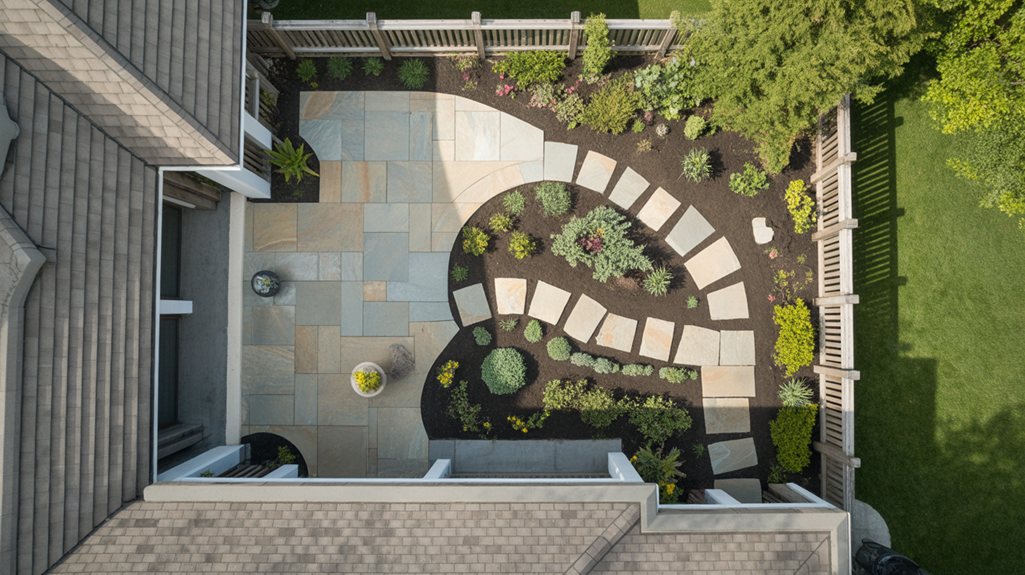
Before you place a single plant or paver, you’ll need to understand how your outdoor space actually functions—because the most beautiful garden design fails when it doesn’t work with your daily movement patterns.
Observe where you naturally walk, how guests enter your yard, and which areas receive the most foot traffic. These paths reveal the layout’s true demands. Placing pavers along established routes prevents worn grass and protects plants from trampling damage. Consider how sunlight moves throughout the day, affecting both plant health and paver heat retention.
Sketch your space’s dimensions and note problem areas where water pools or erosion occurs. Document seasonal changes too. This foundational assessment prevents costly redesigns later and guarantees your layout genuinely serves your family’s outdoor lifestyle while protecting your plants from preventable stress.
Choose Pavers That Complement Your Plant Palette
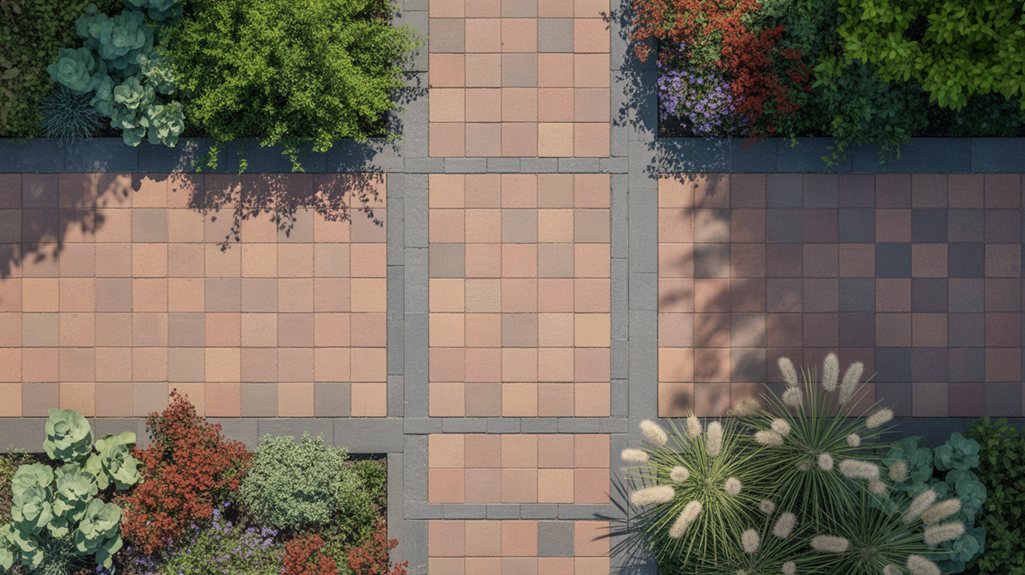
Your paver selection dramatically influences whether your landscape feels cohesive or disjointed, because the colors, textures, and materials you choose either harmonize with or clash against your plants’ natural hues and growing characteristics. When you pick pavers that compete with vibrant foliage, you’ll create visual chaos that exhausts the eye rather than soothes it. Instead, consider warm-toned pavers like terracotta or cream to complement cool-colored plants such as hostas or ornamental grasses. Alternatively, cool gray or charcoal pavers provide neutral backdrops that let flowering plants shine without overwhelming the space. Think about texture too—rough pavers pair beautifully with delicate blooms, while smooth surfaces let structural plants take center stage. This thoughtful approach transforms your landscape into a unified sanctuary that genuinely serves your family’s wellness and enjoyment.
Select Plants Based on Climate, Sunlight, and Soil
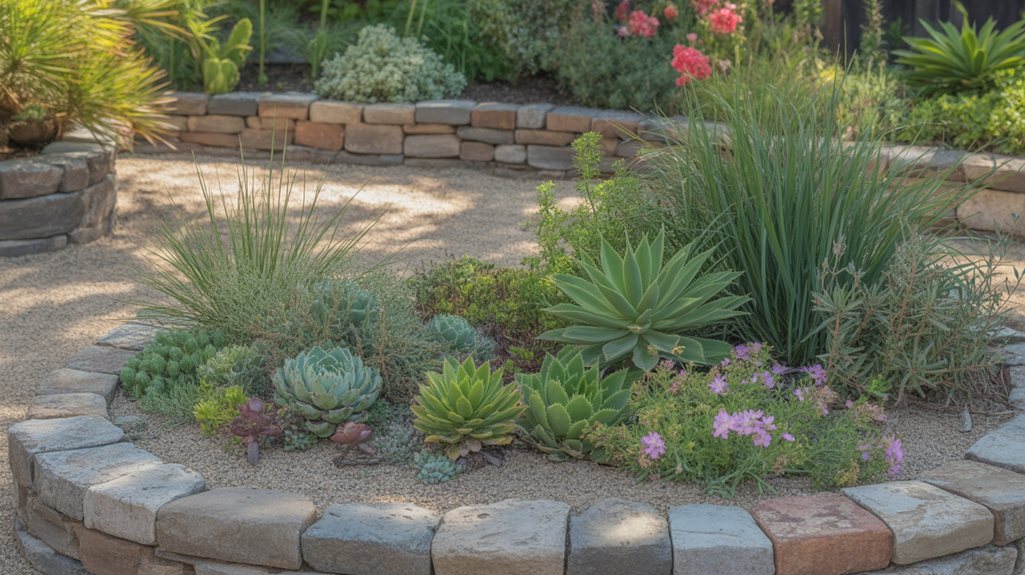
While your paver selection creates the visual foundation of your landscape, the plants you choose must actually thrive in your specific growing conditions—otherwise you’ll end up replacing dead or struggling vegetation season after season, wasting both money and effort. Start by evaluating your climate zone, which determines which plants survive winter temperatures in your area. Next, observe your space’s sunlight patterns throughout the day—some areas receive full sun (six-plus hours), while others stay partially shaded or fully shaded. Finally, test your soil’s composition and pH level, since different plants require varying drainage and acidity levels. When you match plants to these three factors, you’ll create a self-sustaining landscape that requires less maintenance, costs less over time, and demonstrates genuine care for your land’s natural ecosystem.
Balance Paver Patterns With Plant Density
Once you’ve selected plants that’ll thrive in your specific conditions, you’re ready to contemplate how they’ll interact with your hardscape—the pavers, pathways, and patios that form your landscape’s structural backbone.
The challenge arises when dense plantings overwhelm paver patterns, creating visual chaos, or when sparse vegetation makes hard surfaces feel cold and disconnected. You’ll want to create rhythm by alternating densely planted areas with open paver sections.
For example, cluster shrubs and perennials around patio edges while leaving clear sightlines across central pathways. This approach prevents overcrowding while letting your paver design shine. Aim for roughly 60% hardscape and 40% plantings in high-traffic zones, reversing this ratio in relaxation areas. This balanced composition guides movement, reduces maintenance demands, and creates inviting outdoor spaces that serve your family’s actual needs.
Space Plants and Pavers for Flow and Function
Strategic spacing between plants and pavers determines whether your landscape’ll function smoothly or create obstacles that frustrate daily movement and increase upkeep. Cramped layouts force you to navigate around vegetation, damaging plants while making maintenance difficult. You’ll want to position pavers at least eighteen inches from mature plant spreads, allowing comfortable foot traffic and air circulation that reduces disease. Conversely, excessive spacing leaves your landscape feeling disconnected and uninviting. Plan pathways through planted areas using three-foot-wide pavers for natural walking patterns, which guides visitors while protecting plant roots from compaction. This intentional arrangement reduces trampling damage, lowers maintenance demands, and creates an inviting space where people move naturally through your garden without compromising plant health or aesthetic appeal.
Coordinate Paver and Plant Colors for a Unified Palette
Color harmony between your pavers and plants creates the visual backbone of your landscape design, yet many homeowners overlook this essential connection by treating hardscaping and vegetation as separate elements. When you choose paver colors that clash with surrounding foliage, you’ll fragment your outdoor space visually, making it feel disjointed and poorly planned.
To solve this, select pavers in neutral tones—grays, taupes, or warm beiges—that complement rather than compete with your plants. These foundational colors allow vibrant greens and seasonal blooms to shine as focal points. Alternatively, echo your paver tones in plant selections by pairing warm-colored stone with golden or bronze-leaved varieties. This coordinated approach creates a cohesive environment that feels intentional and welcoming, ultimately enhancing both curb appeal and usable outdoor living spaces.
Layer Plants by Height and Growth Habit
When you arrange all your plants at similar heights, your landscape becomes visually flat and monotonous, failing to draw the eye through different layers that create depth and interest. Strategic layering transforms your space into an engaging design that guides visitors through multiple visual planes.
Strategic layering transforms a flat, monotonous landscape into an engaging design that guides visitors through multiple visual planes.
Consider these layering techniques:
- Tall backdrop plants (trees, ornamental grasses) establish structure and screen undesirable views
- Mid-level shrubs create transitional zones between heights, preventing abrupt visual jumps
- Low groundcovers and perennials soften edges while anchoring your design’s foundation
- Spreading plants fill horizontal space, balancing vertical elements throughout your landscape
Plant for Every Season: Year-Round Garden Interest
You can transform your garden into a dynamic landscape that captivates throughout the year by strategically selecting plants that offer spring and summer blooms alongside fall and winter foliage, ensuring visual interest when most gardens fade into dormancy. Rather than relying solely on flowering perennials that disappear after blooming, you’ll want to incorporate ornamental grasses, evergreens, and plants with striking bark or seed heads that provide structure and color during colder months when these elements become your garden’s focal points. This layered approach prevents the common problem of a boring winter landscape while maximizing your pavers’ visual context, as the plants surrounding them will maintain their appeal across all seasons.
Spring And Summer Blooms
The shift from winter’s dormancy into spring and summer offers an essential window to establish garden vigor through strategic plant selection. You’ll discover that coordinating blooms across seasons creates continuous visual interest while serving your landscape’s structural needs.
Consider these proven approaches:
- Plant early bloomers like tulips and daffodils alongside pavers for spring color changes
- Select summer perennials such as coneflowers and black-eyed Susans for sustained pollinator activity
- Incorporate ornamental grasses that complement flowering plants while defining paver edges
- Layer bloom times by combining spring bulbs with summer-flowering shrubs for extended displays
You’ll maximize your garden’s potential by choosing plants that thrive in your specific hardiness zone, ensuring they establish strong root systems before heat arrives. This strategic timing reduces maintenance demands while creating welcoming spaces that benefit both your community and local ecosystems.
Fall And Winter Foliage
As spring and summer blooms fade, many gardeners mistakenly believe their landscape enters a dormant, visually uninteresting phase—but this assumption overlooks the dramatic potential of fall and winter plant selections. You can combat seasonal dullness by incorporating evergreens like boxwoods and hollies, which maintain vibrant foliage year-round. Ornamental grasses provide texture and movement, while plants such as winterberry and serviceberry deliver striking berries that feed wildlife. Consider Japanese maples and dogwoods for distinctive branching patterns that become architectural focal points when bare. You’ll also want to include hellebores and winter-flowering pansies for subtle color during the bleakest months. These strategic plantings don’t just prevent visual monotony; they’ll transform your space into a dynamic landscape that offers beauty, wildlife habitat, and year-round interest regardless of season.
Install Your Plant and Paver Layout for Success
Getting your plant and paver layout right from the start makes all the difference in creating a landscape that’ll last for years without constant frustration. Poor planning leads to overcrowding, drainage issues, and plants dying prematurely, which wastes your time and resources.
To serve your community effectively through thoughtful landscaping, follow these installation steps:
- Mark pavers using chalk lines to guarantee straight edges and proper spacing for water flow
- Dig planting holes slightly deeper than root balls, allowing soil settlement without exposing roots later
- Position taller plants toward the back to avoid shading shorter varieties and blocking sight lines
- Compact soil firmly around each plant to eliminate air pockets that cause root failure
Taking these deliberate steps prevents expensive corrections and creates landscapes that genuinely enhance neighborhood appeal while requiring minimal maintenance long-term.
Maintain and Adjust Your Design Seasonally
Once you’ve installed your plants and pavers with proper spacing and positioning, your work doesn’t end—seasonal changes bring new challenges that’ll affect how your landscape performs throughout the year. Temperature fluctuations, moisture levels, and growth rates shift dramatically with each season, requiring you to adapt your maintenance routine accordingly.
| Season | Main Challenge | Your Action | Expected Result |
|---|---|---|---|
| Spring | Rapid growth overwhelms spacing | Prune and thin plants | Maintains design balance |
| Summer | Drought stress and heat damage | Increase watering frequency | Healthy, vibrant plants |
| Fall | Debris accumulation on pavers | Clear leaves regularly | Prevents surface damage |
| Winter | Frost heave and root exposure | Mulch and protect roots | Guarantees spring recovery |
Adjusting irrigation schedules, removing dead growth, and monitoring paver settling keeps your landscape thriving while honoring the investment you’ve made in creating this beautiful, functional space.
Frequently Asked Questions
How Much Budget Should I Allocate for Pavers Versus Plants?
You’ll typically allocate 60% of your hardscape budget to pavers and 40% to plants. However, you can adjust these percentages based on your garden’s primary function—prioritize pavers for high-traffic areas and plants for visual softness.
What Tools Do I Need to Install Pavers Correctly Myself?
You’ll need a level, rubber mallet, spacers, and a wheelbarrow. Grab a shovel, rake, and landscape fabric too. You’ll also want safety glasses, gloves, and a tape measure for precise installation.
How Often Should I Water Newly Planted Areas After Installation?
You’ll water newly planted areas daily for the first two weeks, then gradually reduce frequency as plants establish. Check soil moisture regularly—it should stay consistently moist but not waterlogged to support healthy root development.
Can I Modify My Layout if Plants Outgrow Their Spaces?
You can absolutely modify your layout as plants grow. Prune oversized specimens, relocate plants to roomier spots, or remove them entirely to serve your garden’s best interests. Flexibility guarantees your landscape remains beautiful and functional for everyone enjoying it.
Which Plants Prevent Weeds From Growing Between Paver Joints?
You’ll want to plant creeping thyme, sedums, and sweet woodruff between your pavers. These low-growing ground covers spread densely, choking out weeds while you serve your community through beautiful landscaping.