Maneuvering state cannabis laws effectively means you can’t assume what’s legal at home applies everywhere else, because each state enforces its own possession limits, licensing rules, and medical qualifications that shift constantly. You’ll want to check your state’s official government website and reliable resources like NORML before making any decisions. Staying informed protects you from serious legal risks, and understanding the full regional landscape reveals critical distinctions that could make or break your next move.
Expert Highlights
- Research your specific state’s cannabis laws through government websites, as rules vary widely from full legalization to criminal prohibition.
- Monitor state legislature websites and subscribe to industry newsletters to track frequent regulatory changes without expensive legal fees.
- Understand licensing requirements early, since application windows close quickly and require background checks and community impact statements.
- Never transport cannabis across state lines, as interstate transport remains a federal offense regardless of individual state legality.
- Verify whether medical cards from your home state provide legal protection in other states before traveling with cannabis.
How State Cannabis Laws Actually Differ by Region
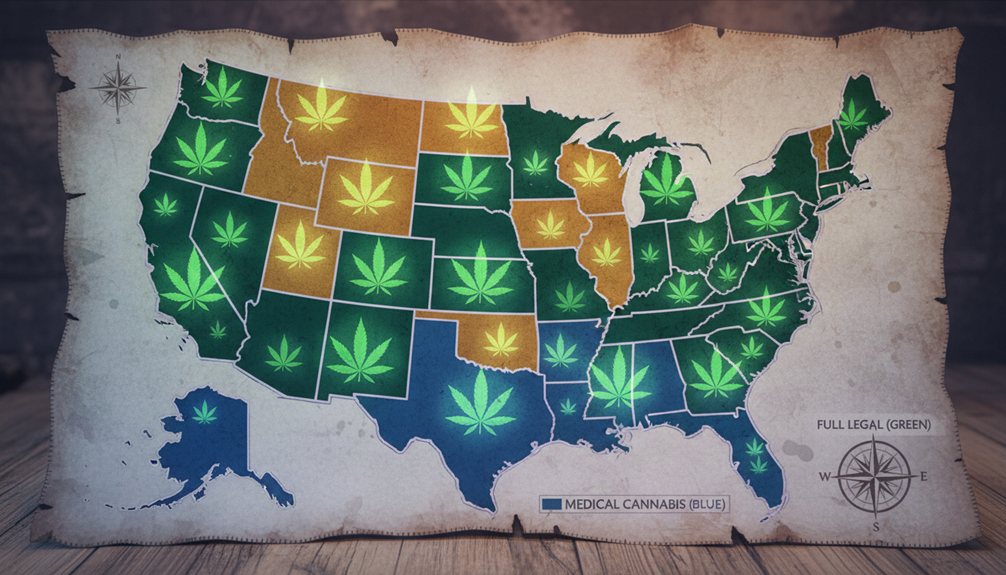
Cannabis laws in the United States aren’t a unified system — they’re a patchwork of rules that change dramatically depending on where you live. Some states, like Colorado and California, have fully legalized recreational use, allowing adults to purchase and possess cannabis freely. Others, like Texas, restrict it to medical use only, with strict qualifying conditions. Several states still treat any possession as a criminal offense. If you’re serving clients, patients, or community members who rely on cannabis for wellness, you need to understand these regional differences clearly. Crossing state lines with cannabis, even between two legal states, remains federally illegal. Knowing where your clients live helps you guide them toward compliant, safe access that protects both their health and their legal standing.
Find Your State Cannabis Laws Before You Make a Move
Before you advise anyone on cannabis access or make any decisions yourself, you need to know exactly what your state permits — and what it doesn’t. State laws change frequently, and acting on outdated information can put you or someone you’re helping in serious legal jeopardy.
Start by visiting your state’s official government website, where you’ll find current statutes on possession limits, qualifying conditions, and licensed dispensaries. Organizations like NORML and the Marijuana Policy Project also maintain regularly updated state-by-state breakdowns that are easy to read and verify.
Once you understand your state’s framework, you can guide others with confidence and accuracy. Knowing the rules isn’t just about protecting yourself — it’s about genuinely serving the people who are counting on your knowledge.
The Licenses and Deadlines You Can’t Afford to Miss

Once you know what your state allows, the next step is understanding who’s legally permitted to operate within that framework — and the licensing requirements and deadlines that come with it. Most states issue limited licenses for dispensaries, cultivators, and processors, meaning spots fill quickly and application windows close fast. Missing a deadline could set your business back by months or even years. You’ll typically need background checks, financial disclosures, facility plans, and community impact statements before submitting anything. Some states also require social equity qualifications, so research those categories carefully. Start building your application well before the window opens, because rushed submissions often get rejected. Staying organized and deadline-focused isn’t just good practice — it’s the difference between serving your community and watching someone else do it.
How to Track Cannabis Law Changes Without the Legal Fees
Keeping up with cannabis law changes doesn’t have to drain your budget, and there are several reliable, low-cost ways to stay informed without hiring an attorney for every update. You can monitor state legislature websites, subscribe to cannabis industry newsletters, and join advocacy groups that track regulatory shifts on your behalf.
| Resource | Cost | Best For |
|---|---|---|
| State Legislature Website | Free | Bill tracking |
| NORML State Laws Page | Free | Quick law summaries |
| Leafly News | Free | Industry updates |
| Cannabis Regulators Association | Free | Regulatory alerts |
| MJBizDaily Newsletter | Free/Paid | Business compliance |
These tools empower you to serve your clients, patients, or community more effectively by helping you anticipate changes before they disrupt your operations.
Why State Cannabis Laws Don’t Travel With You Across State Lines
Even if you live in a state where cannabis is fully legal, that protection disappears the moment you cross into another state’s borders, and understanding why can save you from serious legal consequences.
Each state operates under its own independent legal system, meaning your home state’s cannabis laws have zero jurisdiction elsewhere. Consider these four realities:
- A legal purchase in Colorado becomes illegal contraband in Kansas
- Your medical card from California won’t protect you in Texas
- Interstate highways fall under federal jurisdiction, making transport a federal offense
- Border checkpoints between states can result in immediate arrest and prosecution
When you’re serving clients or community members who use cannabis legally, helping them understand these boundaries protects them from unintended criminal exposure across state lines.
Frequently Asked Questions
Can I Legally Gift Cannabis to Someone in My State?
You can gift cannabis legally in some states, but it depends on where you live. Check your state’s specific gifting limits, recipient age requirements, and whether any commercial transaction’s involved to stay compliant.
Does Cannabis Use Affect My Federal Employment Background Check?
Yes, cannabis use can affect your federal employment background check. Even if it’s legal in your state, federal agencies follow federal law, where cannabis remains illegal, so you’re risking your clearance or job offer.
How Do Cannabis Laws Apply to Tourists Visiting Legal States?
As a tourist, you can legally purchase and consume cannabis in legal states, but you can’t transport it across state lines. Always check local consumption rules, as public use is often prohibited even where it’s legal.
Can Landlords Prohibit Cannabis Use in Private Residences Legally?
Yes, landlords can legally prohibit cannabis use in your rental unit, even in legal states. You’ll want to review your lease carefully, as violating these terms could jeopardize your housing situation and rental agreement.
Does a Cannabis Conviction Automatically Disqualify Me From Professional Licenses?
A cannabis conviction doesn’t automatically disqualify you from professional licenses, but it can impact your eligibility. You’ll need to review your state’s specific licensing board rules, as they vary widely by profession and jurisdiction.