Professional tree removal in Minnetonka is necessary when you notice significant decay, dangerous leaning (over 15°), root damage to structures, power line interference, or disease spread like Oak Wilt or Emerald Ash Borer. Trees 8+ inches in diameter require permits, with fines starting at $500 for non-compliance. Costs range from $200-$500 for smaller trees and $800-$1,500 for larger ones, depending on accessibility. The following insights will help you make informed decisions about your property’s tree health and safety.
Expert Highlights
- Professional tree removal services in Minnetonka require permits for trees wider than 8 inches in diameter.
- Emergency tree services are available 24/7 for storm damage with certified arborists ensuring safety protocols.
- Costs range from $200-$500 for smaller trees and $800-$1,500 for larger trees in the Minnetonka area.
- Stump removal options include grinding, chemical treatment, manual extraction, and excavation depending on your needs.
- Signs indicating removal is necessary include significant decay, dangerous leaning, root invasion, and disease infection.
When to Consider Professional Tree Removal in Minnetonka
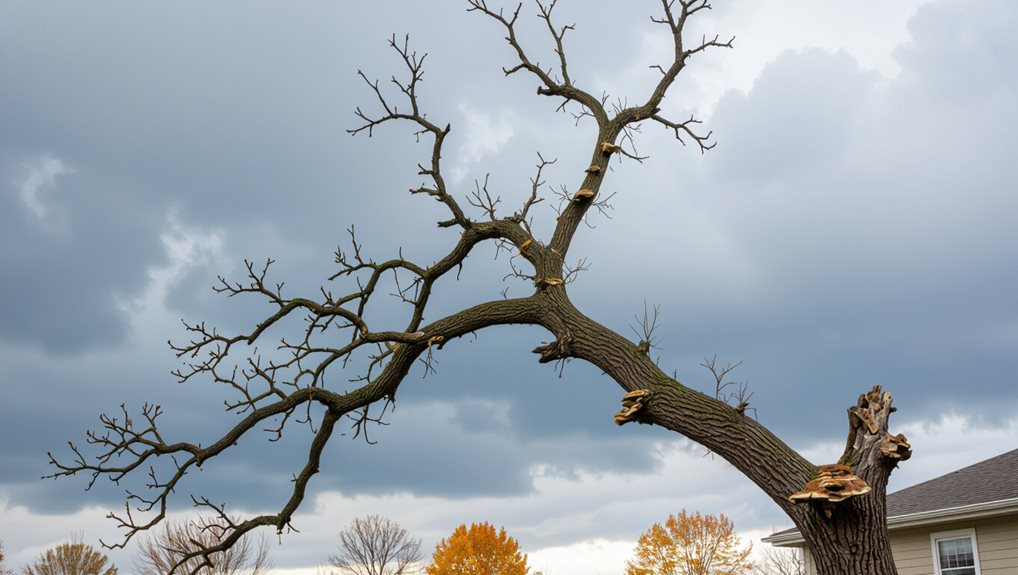
While beautiful trees enhance your Minnetonka property, certain circumstances demand professional removal for safety and property protection. You’ll need expert intervention when trees show significant decay, with multiple dead branches or fungal growth that compromises structural integrity.
If your tree leans more than 15 degrees, especially after storms, it poses an imminent fall risk that could damage your home or injure family members. Trees with roots lifting your foundation, cracking driveways, or invading sewer lines require immediate attention before costly structural damage occurs.
You should also consider removal when branches continuously interfere with power lines despite regular trimming, or when disease has spread throughout the tree, making recovery impossible. After severe storm damage, professionals can assess whether preservation attempts would be futile or dangerous.
Common Tree Diseases Requiring Removal in Minnesota
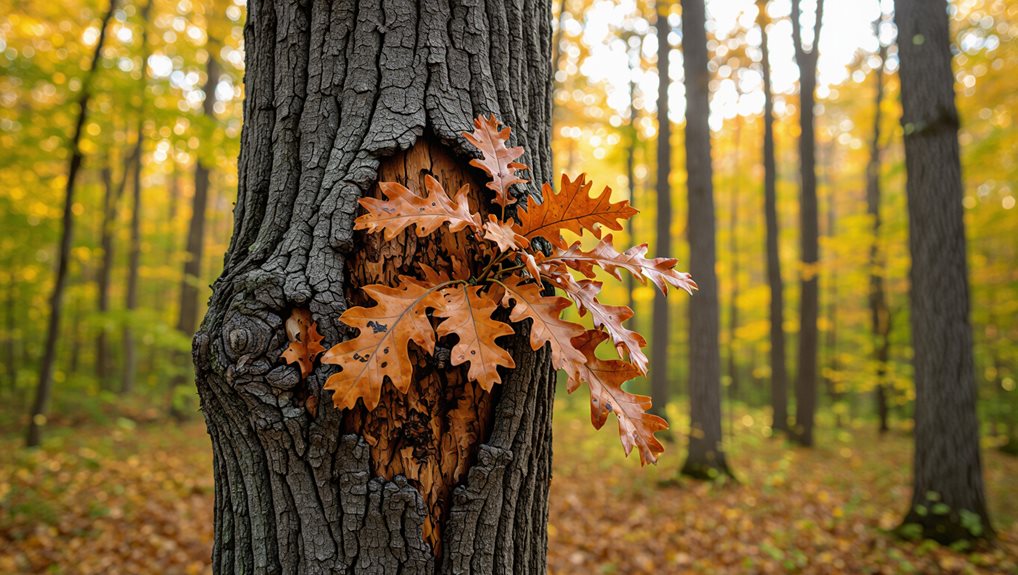
Minnesota’s harsh climate creates ideal conditions for several devastating tree diseases that often necessitate complete removal to protect surrounding vegetation. You’ll commonly encounter oak wilt, which spreads rapidly through root grafts, killing majestic oaks within weeks of infection. Dutch elm disease continues to threaten remaining elms, while emerald ash borer infestations have devastated ash populations throughout the state.
Watch for telltale signs: sudden wilting, premature leaf drop, bark splitting, or fungal growths at the tree’s base. When you notice discolored or thinning canopies, branch dieback, or unusual sawdust accumulation, it’s time to call a professional. Early intervention can sometimes save neighboring trees, even when the infected specimen requires removal. Your prompt action protects your property’s remaining landscape and helps prevent these destructive diseases from spreading throughout your Minnetonka neighborhood.
Emergency Tree Services: Storm Damage Response
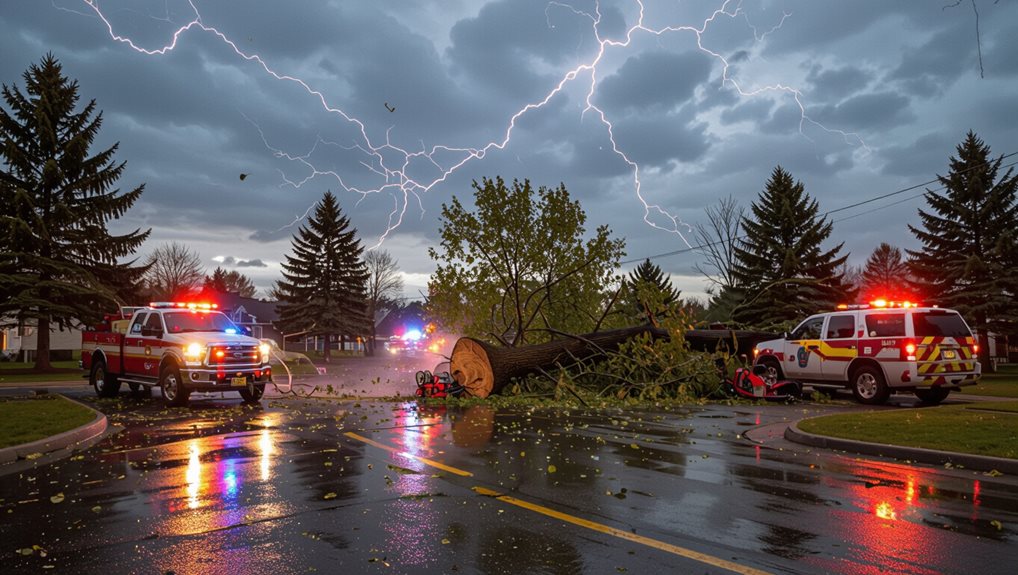
When severe weather strikes Minnetonka, the aftermath often includes dangerous tree damage that requires immediate professional attention. Hanging limbs, split trunks, and uprooted trees create hazardous conditions that threaten your property and loved ones.
Our 24/7 emergency response team mobilizes quickly after storms, evaluating damage and prioritizing threats before they cause further harm. We’re equipped with specialized gear to safely remove fallen trees from structures, clear roadways, and mitigate additional property damage. The vital first 48 hours after a storm presents the highest risk, when weakened trees may suddenly fail during cleanup efforts.
Don’t attempt to handle storm-damaged trees yourself—even seemingly minor damage can hide serious structural compromises. Our certified arborists evaluate each situation thoroughly, providing both immediate safety measures and long-term solutions to protect your home and family.
Understanding Minnetonka’s Tree Removal Permits and Regulations
Before removing any trees on your property in Minnetonka, you’ll need to navigate the city’s specific permit requirements and regulations designed to protect the community’s urban forest. The permit process helps preserve Minnetonka’s natural beauty while ensuring responsible tree management.
- Trees with a diameter of 8+ inches measured at 4.5 feet above ground typically require permits
- Heritage trees (certain oak, maple, and pine species) have additional protections
- Permit applications must include site plans showing tree locations and removal justification
- Emergency removals for hazardous trees require photo documentation and prompt reporting
- Failure to obtain proper permits can result in fines starting at $500 and mandatory replacement plantings
You’ll find city officials are generally helpful with guiding you through the process, especially when you’re addressing legitimate concerns about safety or disease control.
The Process: What to Expect During Your Tree Removal
The actual tree removal process in Minnetonka follows a structured sequence of events that guarantees safety, efficiency, and minimal impact on your property. You’ll first see professionals arriving to assess potential hazards, such as power lines or structures, that could complicate removal. They’ll establish a clear drop zone, marking the area with safety cones or tape to prevent accidents.
Next, the crew will climb larger trees or position their bucket truck, systematically removing branches from top to bottom—a technique called “topping and limbing.” For challenging situations near homes or landscaping, you’ll notice they use ropes to control falling sections. After felling the main trunk, they’ll either grind the stump immediately or schedule this as a separate service. Finally, they’ll clean up all debris, leaving your property in pristine condition.
Protecting Your Property During Tree Removal Operations
Professional tree removal companies prioritize safeguarding your property throughout the entire removal process, implementing thorough protection measures before a single cut is made. Your property’s protection requires careful planning and specialized equipment to prevent potential damage from falling branches or heavy machinery.
Property protection isn’t an afterthought—it’s our first priority before any tree removal begins.
- Heavy-duty tarps and plywood sheets shield delicate landscaping and garden features
- Strategic placement of barriers around walkways prevents concrete cracking from equipment weight
- Advanced rigging systems control the descent of large limbs away from structures
- Temporary removal of outdoor furniture, décor, and vehicles eliminates damage risk
- Protective covering for windows near the work zone guards against flying debris
You’ll appreciate these preventative measures that maintain your property’s integrity while dangerous removal work progresses, saving you from costly repairs afterward.
Stump Removal Options and Best Practices
After complete tree removal, unsightly stumps remain as persistent reminders of the previous tree, creating both aesthetic challenges and practical hazards in your landscape. These obstacles not only disrupt your yard’s visual appeal but also pose tripping risks and attract unwanted pests and fungi.
You’ve got several effective options for stump elimination. Grinding, the most popular method, uses specialized equipment to reduce the stump to wood chips several inches below ground level. Chemical removal involves applying potassium nitrate to accelerate decomposition, while manual extraction works well for smaller stumps. For the most thorough solution, excavation completely removes the stump and root system.
We recommend grinding for most Minnetonka properties due to its balance of effectiveness, cost, and minimal landscape disruption. Whatever method you choose, professional handling guarantees proper disposal and site restoration.
Sustainable Disposal: What Happens to Your Tree After Removal
After your tree is removed, you’ll want to evaluate sustainable disposal options that benefit the environment rather than simply discarding the wood. Your tree can be transformed into useful mulch through a process that involves chipping the branches and trunk, then allowing the materials to decompose partially before application to gardens, playgrounds, or natural areas. Many tree service companies in Minnetonka offer eco-friendly wood recycling programs where your tree materials can find new life as furniture, firewood, or even artistic crafts, reducing landfill waste and providing valuable resources to the community.
Mulch Creation Process
Nearly every part of your removed tree can be transformed into nutrient-rich mulch, creating a sustainable full-circle process for your landscape. After your tree is removed, our specialized equipment breaks down the material through a careful multi-step process that maximizes nutritional value while eliminating potential hazards.
The mulch creation process includes:
- Initial grinding where large wood pieces are reduced to manageable sizes
- Secondary processing to achieve uniform texture and size
- Aging period allowing beneficial microorganisms to begin decomposition
- Quality screening to remove any non-organic materials
- Optional coloring with environmentally safe dyes for aesthetic purposes
This recycling approach prevents valuable organic material from entering landfills while providing you with premium mulch that improves soil health, reduces watering needs, and suppresses weeds—all from what was once your backyard tree.
Eco-Friendly Wood Recycling
When your tree must come down, its journey doesn’t end at removal—it transforms into valuable resources through our extensive recycling program. Your tree’s wood can serve numerous sustainable purposes, reducing landfill waste while creating valuable materials for your community.
Instead of contributing to environmental degradation, your removed trees become beneficial resources. We convert larger trunks into lumber for construction projects, while branches and smaller pieces become nutrient-rich mulch for local gardens. Even the sawdust finds purpose as animal bedding or biomass fuel. This all-encompassing approach guarantees nothing goes to waste.
Cost Factors for Tree Removal Services in Minnetonka
When budgeting for tree removal in Minnetonka, you’ll need to evaluate two primary cost factors that greatly impact your final price. The size and complexity of your tree directly influences labor requirements and equipment needs, with larger trees typically costing $800-$1,500 compared to smaller specimens at $200-$500. Your property’s accessibility also plays an essential role in pricing, as difficult-to-reach trees requiring specialized equipment or presenting obstacles like power lines, fences, or limited access points will increase your overall investment.
Size and Complexity
The towering height and intricate structure of a tree greatly impact the overall cost of removal services in Minnetonka. When you’re requesting quotes for tree removal, professionals will carefully evaluate several key complexity factors that determine the final price.
- Trees exceeding 60 feet require specialized equipment and present greater safety risks
- Dense canopies with extensive branching require more precise dismantling procedures
- Trees leaning toward structures demand advanced rigging techniques to prevent damage
- Diseased or dead trees pose unpredictable breaking points during removal operations
- Limited access locations (backyard trees with no direct equipment access) increase labor requirements
You’ll find that contractors assess these variables during their initial evaluation, ensuring your quote accurately reflects the unique challenges of your specific situation. Understanding these complexity factors helps you anticipate costs and appreciate the expertise required for safe, effective removal.
Accessibility Issues
Reaching your tree’s location often poses significant challenges that directly impact removal costs in Minnetonka neighborhoods. Trees situated in hard-to-access backyards, positioned near power lines, or surrounded by landscaping features require specialized equipment and additional labor hours. When your property has limited access points, crews might need to manually carry debris rather than using efficiency-boosting machinery.
If your tree stands near a busy road in areas like Ridgedale or Glen Lake, traffic control measures become necessary, adding to your overall expense. Similarly, trees on steep terrain or close to structures demand extra safety precautions, increasing labor costs. To minimize these accessibility charges, consider scheduling removals during off-seasons when your property offers drier, more navigable conditions. You’ll also benefit from clearing potential obstacles before the crew arrives, creating straightforward paths to and from the worksite.
Replanting Strategies: Maintaining Minnetonka’s Urban Forest
After removing trees from your Minnetonka property, strategically replanting becomes essential for maintaining our community’s cherished urban forest. Your thoughtful replanting efforts contribute greatly to our environmental resilience while enhancing property values throughout our neighborhoods.
Replanting trees after removal isn’t just good stewardship—it’s vital for preserving Minnetonka’s natural character and collective home values.
Consider these proven replanting approaches to maximize success:
- Select native Minnesota species that thrive in our specific climate conditions
- Diversify your tree selections to prevent widespread disease vulnerability
- Position new trees at proper distances from structures, utilities, and other trees
- Implement proper mulching techniques that retain moisture without suffocating roots
- Establish a consistent watering schedule during the critical first two years of growth
When you participate in replanting initiatives, you’re not just beautifying your property—you’re ensuring Minnetonka remains the tree-rich community we all value.
Frequently Asked Questions
How Far in Advance Should I Schedule a Non-Emergency Tree Removal?
For non-emergency tree removal, you’ll want to schedule 2-4 weeks ahead. This gives you time to get multiple quotes and guarantees you’re on the company’s calendar when you need them.
Can I Keep the Wood From My Removed Tree?
Yes, you can keep the wood from your removed tree. Most companies will leave it for you upon request. Just let them know when scheduling your service that you’d like to keep it.
Will My Homeowner’s Insurance Cover Tree Removal Costs?
Your homeowner’s insurance may cover tree removal if it falls due to storms or damages structures. Contact your provider to verify coverage details in your specific policy.
How Close Can Equipment Get to My House?
Equipment can get within 5-10 feet of your house safely. You’ll be amazed how our compact machines navigate tight spaces while protecting your property during the removal process.
Do You Offer Payment Plans for Large Tree Removal Projects?
Yes, we offer flexible payment plans for your large tree removal projects. You’ll join many satisfied homeowners who’ve spread their costs over manageable monthly installments. Just ask us for options!
Expert Final Thoughts
When you’re facing tree issues in Minnetonka, you’re not alone. Whether it’s disease, storm damage, or necessary removal for construction, professional services guarantee your property remains safe while complying with local regulations. Don’t wait until a damaged tree becomes a hazard. By working with certified arborists, you’ll protect your home, preserve Minnetonka’s urban canopy, and contribute to our community’s natural beauty for generations to come.