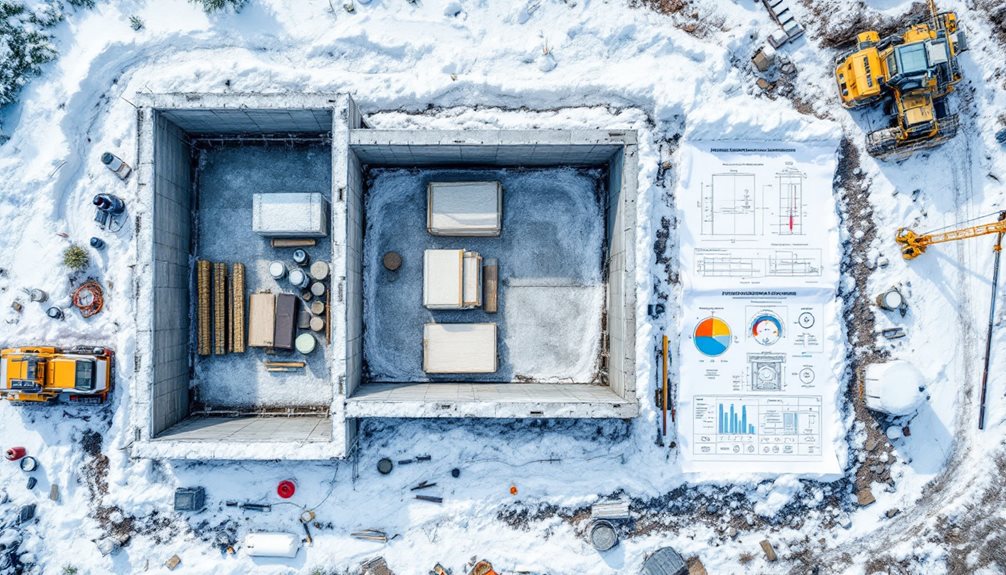
You’ll need rigorous planning to successfully pour concrete in winter temperatures below 40°F. Start by monitoring weather forecasts and implementing temperature sensors to track surface, core, and edge conditions. Choose specialized cold-weather concrete mixes with appropriate additives like accelerators and water reducers, while maintaining proper heat through insulated blankets and heated enclosures. Swift execution and meticulous protection during the critical first 72 hours of curing will determine your project’s long-term durability and strength. The following strategies will guarantee your winter concrete work meets professional standards.
Expert Highlights
- Monitor weather forecasts and maintain concrete temperatures above 40°F through extensive temperature monitoring systems at critical placement locations.
- Select appropriate concrete mix designs with accelerators and lower water-cement ratios to ensure proper curing in cold conditions.
- Use heated enclosures, windbreaks, and insulated blankets to protect freshly placed concrete from freezing temperatures and harsh elements.
- Heat mixing water to 140°F and warm aggregates before placement, while ensuring the ground and forms aren’t frozen.
- Implement real-time monitoring during the critical first 72 hours of curing with wireless sensors for immediate temperature deviation alerts.
Assessing Winter Weather Conditions and Project Requirements
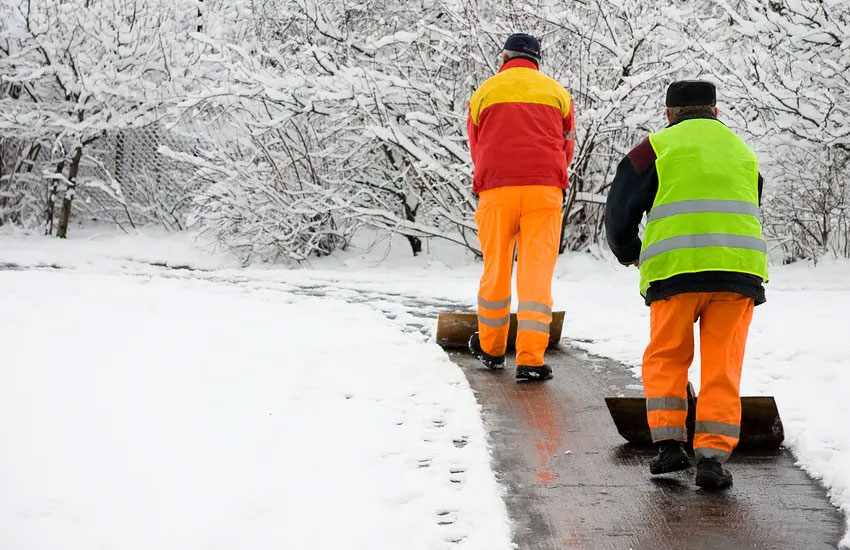
Before beginning any winter concrete project, you’ll need to thoroughly evaluate both the anticipated weather conditions and your specific project requirements to guarantee successful execution. Check local weather forecasts for the next 7-10 days, paying close attention to overnight temperatures, precipitation chances, and wind conditions. You’ll want to look for temperatures that won’t dip below 40°F during curing time.
Consider documenting your project’s unique challenges, like whether you’re working with exposed aggregate or stamped concrete, as these finishes require special cold-weather considerations. Calculate your concrete volume needs and add 10% for winter waste factors. Don’t forget to assess your site’s access points and determine if snow removal equipment might be necessary. Remember, proper winter planning prevents your concrete from looking like a frozen pizza left out in the cold.
Selecting the Right Concrete Mix for Cold Temperatures

When you’re planning a winter concrete project, you’ll need to carefully select additives that prevent freezing and maintain proper curing in cold conditions, such as calcium chloride or polycarboxylate-based accelerators. Fast-setting mix options, including Type III portland cement with a lower water-cement ratio, can help you achieve earlier strength development and reduce the risk of frost damage during critical early curing phases. You’ll want to work closely with your concrete supplier to determine the best combination of accelerating admixtures and cement types for your specific temperature conditions and project requirements, as improper mix selection can lead to reduced durability and potential structural issues.
Additives for Freezing Conditions
Successfully pouring concrete in freezing temperatures requires carefully selected chemical additives that modify how the mix behaves in cold conditions. You’ll want to incorporate accelerating admixtures, which speed up the hydration process and reduce your concrete’s setting time. These additives, like calcium chloride, can cut initial setting time by up to 50% – though you’ll need to watch for potential corrosion if you’re using reinforced concrete.
Consider using water-reducing admixtures alongside your accelerators. They’ll help you maintain workability while using less mixing water, which is essential since excess water can lead to freezing damage. For best results, combine these with air-entraining agents that create tiny air bubbles throughout your mix. These microscopic voids give freezing water somewhere to expand, protecting your concrete from internal pressure damage during freeze-thaw cycles.
Fast-Setting Mix Options
Beyond chemical additives, your choice of concrete mix design plays a major role in cold weather success. For ideal performance in freezing temperatures, you’ll want to take into account Type III portland cement mixes, which achieve initial set up to 50% faster than standard Type I cement. These high-early-strength formulations help your concrete reach critical strength before frost damage can occur.
When selecting your mix, you’ll find that calcium aluminate cement blends offer another reliable fast-setting option, reaching 75% of their ultimate strength within 24 hours. For smaller projects, pre-packaged rapid-hardening mixes containing accelerating compounds can be your best bet. Just remember that faster setting times mean you’ll need to work quickly – so have your finishing crew ready and your forms properly prepared before mixing begins.
Essential Equipment and Materials for Winter Concrete Work

When working with concrete in winter conditions, you’ll need reliable cold weather protection gear, including insulated gloves, water-resistant boots, and layered clothing that allows mobility while keeping you warm and dry. You’ll also want to have plenty of concrete blankets, plastic sheeting, and portable heaters on hand to maintain ideal curing temperatures and protect fresh concrete from freezing. Beyond the basics, you should stock specialized cold-mix additives like accelerators and air-entraining agents that help concrete set properly in low temperatures, ensuring your winter project achieves the desired strength and durability.
Cold Weather Protection Gear
The proper cold weather protection gear serves as your first line of defense against winter’s harsh conditions during concrete work. You’ll need insulated waterproof boots with steel toes, thermal socks, and moisture-wicking base layers to maintain core temperature while preventing sweat accumulation. Layer up with fleece-lined work pants and a weather-resistant jacket that won’t restrict movement during concrete placement and finishing.
Don’t forget your extremities – insulated gloves with rubber coating provide warmth while maintaining dexterity, and a hard hat liner with face protection shields you from biting winds. Safety glasses with anti-fog coating are essential, as is a high-visibility vest that keeps you visible in low-light conditions. Remember, compromising on protection gear isn’t worth risking frostbite or hypothermia when working with cold concrete.
Specialized Cold-Mix Additives
Since winter temperatures can dramatically affect concrete’s setting time and strength development, specialized cold-mix additives become essential components of your cold weather concrete toolkit. You’ll want to focus on three key types: accelerators, which speed up the hydration process; water reducers, which maintain workability while decreasing the water-cement ratio; and air-entraining agents, which create microscopic air bubbles for freeze-thaw resistance.
Don’t just grab any additive off the shelf – you’ll need to carefully select products based on your specific temperature conditions and project requirements. For temperatures between 20-40°F, calcium chloride-based accelerators typically work well, while non-chloride accelerators are better for structural concrete where steel reinforcement is present. Remember to adjust your dosage rates according to the manufacturer’s cold weather guidelines, as using too much can compromise your concrete’s final strength.
Preparing the Job Site for Cold Weather Placement
Proper job site preparation stands as your critical first line of defense against cold weather’s harsh effects on concrete placement. Before pouring that first yard, you’ll need to tackle several essential tasks. First, remove all ice, snow, and standing water from your forms and substrate – these sneaky saboteurs can wreak havoc on your concrete’s integrity. You’ll also want to pre-heat your forms and reinforcing steel to at least 40°F using industrial heaters or insulated blankets.
Don’t forget to establish windbreaks around your pour area – those bitter gusts can rapidly cool your concrete surface and cause crazing. Position your temperature monitoring equipment strategically, and make certain you’ve got proper lighting for those shorter winter days. Remember, your ground preparation must include adequate insulation to prevent freezing from below – it’s like giving your concrete a cozy winter coat.
Cold Weather Concrete Placement Best Practices
Successful cold weather concrete placement demands careful attention to specific techniques that protect your pour from freezing damage. You’ll need to maintain concrete temperature above 40°F (4°C) throughout placement and curing, which means coordinating your team like a well-oiled machine.
Start by heating your mixing water to 140°F (60°C) and warming your aggregates to prevent flash cooling. Don’t place concrete directly on frozen ground or forms – this isn’t amateur hour. Once you’re placing, work quickly but methodically, using windbreaks and heated enclosures to maintain temperature. Your finishing crews should follow closely behind placement teams, and you’ll want to cover fresh concrete immediately with insulated blankets. Remember, timing is everything – if you hear your concrete crackling like Rice Krispies, you’ve waited too long to protect it.
Protecting and Curing Concrete in Freezing Conditions
When winter temperatures plummet below freezing, protecting newly placed concrete becomes a critical race against time that demands swift action and precise execution. You’ll need to shield your concrete from the harsh elements using insulated blankets, straw, or specialized curing compounds that prevent moisture loss and maintain ideal hydration temperatures.
Don’t skimp on protection methods – your concrete needs to maintain a minimum temperature of 50°F for at least three days. Set up wind breaks to prevent cold drafts, and consider using ground heaters or hydronic systems beneath your concrete. You’ll want to monitor internal temperatures using embedded sensors or infrared thermometers. If you’re dealing with large pours, heated enclosures might be your best bet, though they’ll require careful ventilation to prevent CO2 buildup. Remember, proper protection now prevents costly repairs later.
Quality Control and Temperature Monitoring Strategies
Maintaining rigorous quality control during winter concrete work hinges on implementing an extensive temperature monitoring system throughout your project site. You’ll need to deploy temperature sensors at significant locations and monitor them vigilantly during the essential first 72 hours of curing.
| Location | Monitoring Frequency | Important Temperature |
|---|---|---|
| Surface | Every 2 hours | >40°F (4°C) |
| Core | Every 4 hours | >50°F (10°C) |
| Corners/Edges | Every hour | >35°F (2°C) |
| Forms/Ground | Every 6 hours | >32°F (0°C) |
Don’t rely on weather forecasts alone – you’ll need real-time data from multiple monitoring points. Consider investing in wireless sensors that can alert you when temperatures approach vital thresholds, allowing for immediate corrective action before your concrete’s integrity becomes compromised.
Frequently Asked Questions
How Much Extra Should I Budget for Winter Concrete Projects?
You’ll need to pad your budget by 20-30% for those chilly concrete adventures. Between special additives, thermal blankets, and heating equipment, winter’s gonna make your wallet shiver!
Can Decorative Concrete Finishes Be Applied During Winter Months?
You’ll need perfect timing and a heated enclosure for decorative finishes – unless you’re aiming for that trendy “frozen mistake” look that’s all the rage with polar bears.
What Insurance Considerations Are Specific to Winter Concrete Work?
You’ll need beefed-up liability coverage, slip-and-fall protection, and weather delay insurance. Don’t forget worker’s comp – frozen fingers aren’t exactly great at holding concrete finishing tools!
How Do Winter Concrete Projects Affect Construction Loan Schedules?
You’ll need extra wiggle room in your loan timeline since winter concrete takes longer to cure, and those pesky cold-weather delays can turn your schedule into a frozen traffic jam.
Are There Special Permits Required for Winter Concrete Work?
You’ll need standard building permits, but most cities don’t require special winter permits. Just don’t let your inspector catch you thawing concrete with a flamethrower – they hate that!
Expert Final Thoughts
You’ve learned that successful winter concrete work requires careful planning, specialized materials, and strict adherence to temperature control measures. By following these professional guidelines for mix design, site preparation, placement techniques, and proper curing methods, you’ll be well-equipped to tackle cold weather concrete projects with confidence. Remember, protecting your concrete from freezing during those critical first days will guarantee long-lasting, high-quality results that meet both industry standards and client expectations.